
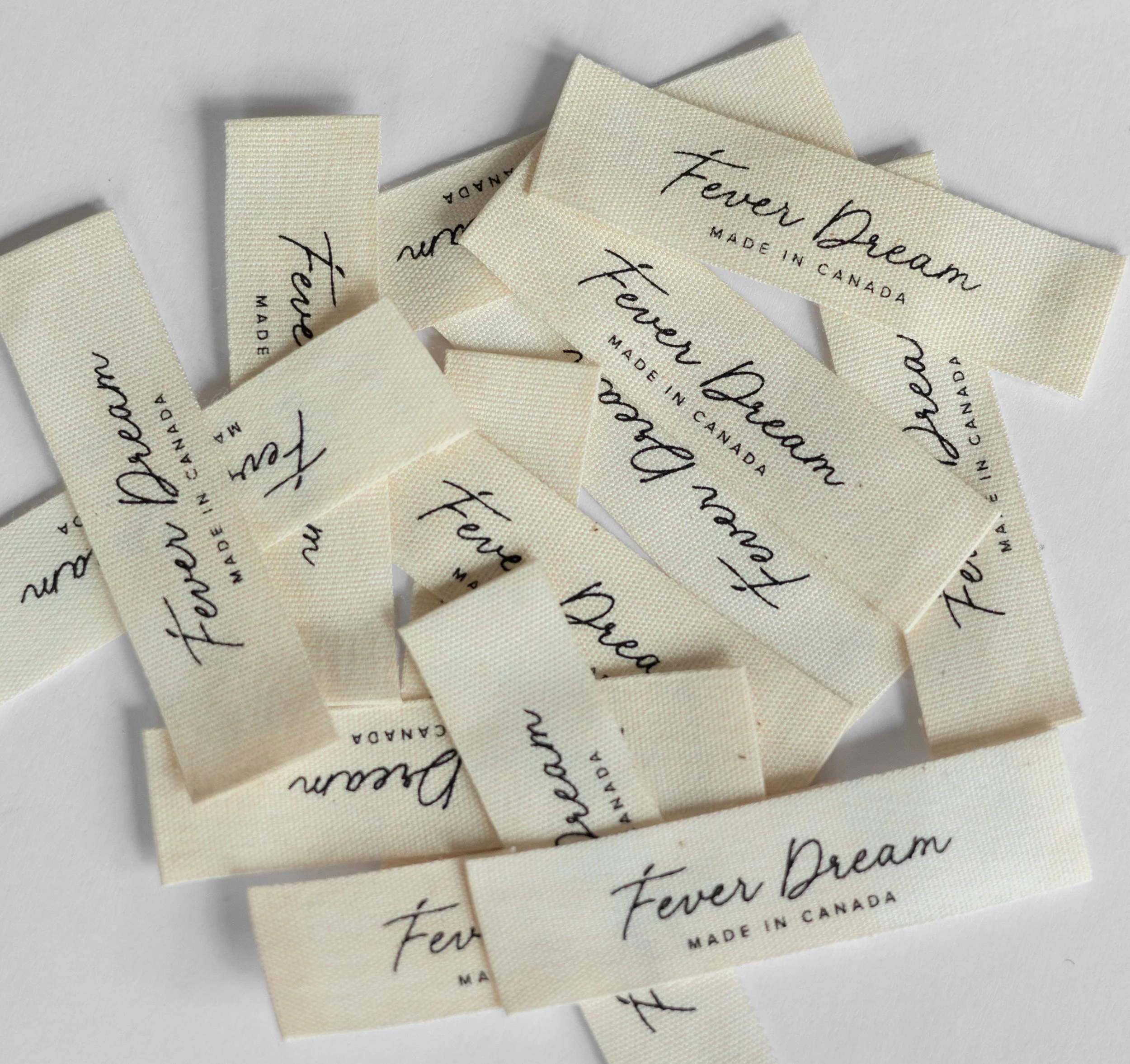
Fever Dream Apparel Case Study
BRAND STRATEGY & DEVELOPMENT, SHOPIFY WEBSITE DESIGN, CONTENT & PHOTOGRAPHY DIRECTION, EMAIL MARKETING AND LAUNCH STRATEGY
PROJECT SNAPSHOT
Brand Strategy & Naming
Visual Identity Development
Photography Planning & Creative Direction
Shopify Website Design & Build
Website Content & Product Messaging
Email Marketing & Automations
Social Content & Launch Strategy
TikTok Promotion Testing
Fever Dream Apparel
Fever Dream Apparel is my own Canadian-made clothing brand, created after I started sewing pants for myself and wondered what would happen if I took the idea further.
The project brought together brand development, a Shopify website, photography, email marketing and a focused launch strategy. It was also an opportunity to create a fresh example of my work, putting the same thinking I bring to client projects into practice for a business of my own.
From the first creative decisions through to launch, the focus was on keeping things manageable, making thoughtful use of limited resources and putting effort into the activities I felt would move the business forward.
The starting point
I began developing Fever Dream in April 2026. I was feeling the itch to have a project of my own and wanted to approach it as an experiment, starting small and seeing where it could go.
Having previously built and sold a clothing business, I already had experience and connections in garment manufacturing and fabric procurement. That gave me a head start on creating the product.
Building the business around it was a separate challenge. I needed a name, a brand, a website, photography and a way to reach potential customers.
I started with one style of pants in a few different fabrics and an initial production run of 124 pairs. With limited time and startup capital, I had to be deliberate about what to invest in and what could wait.
the goal
The goal was to create a cohesive brand and shopping experience, build interest before the product became available and test whether that interest would translate into sales.
I wanted the business to feel considered from the beginning, while giving myself permission to keep the launch simple.
That meant developing a clear visual direction, creating a manageable collection of good-quality images and building a website that gave people the information they needed to feel comfortable purchasing.
It also meant choosing a marketing approach I could realistically follow through on, alongside my consulting work.
The Branding
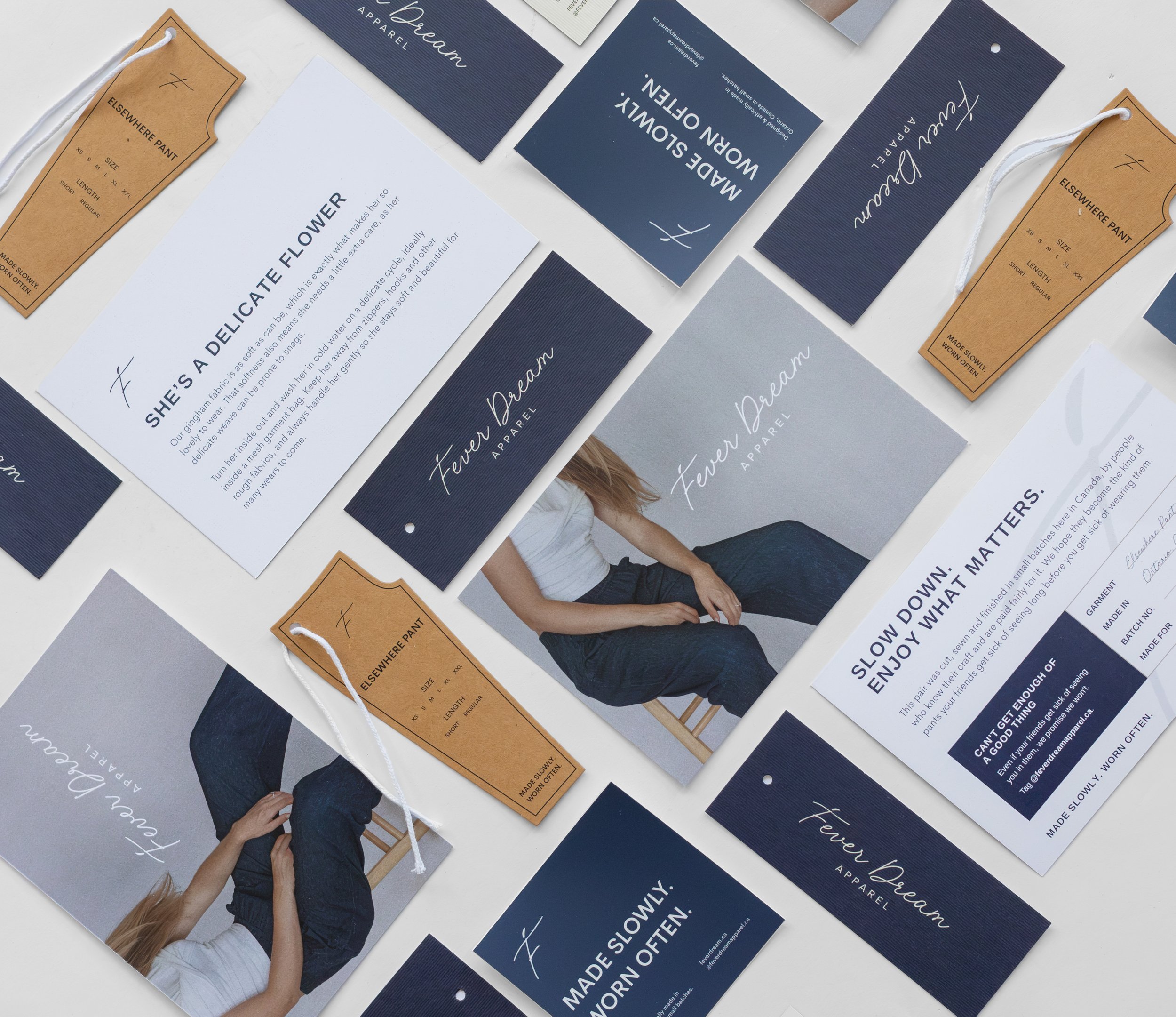
I wanted Fever Dream to feel simple and elevated, with a little whimsy. That direction guided the name, visual identity, photography and overall presentation.
With one core product, the branding needed to give the business a recognizable personality while leaving room for the different fabrics and styling possibilities to come through.
For the launch photography, I worked with one model and a photographer I knew, creating multiple looks within a manageable shoot.
There were plenty of ways I could have expanded that production. Showing the pants on more body types, ages and skin tones would have been valuable. But I also had to work within the resources I had and allow the brand to develop over time.
The result was a focused collection of images that gave me what I needed for the website, email campaigns and launch content.
The Website
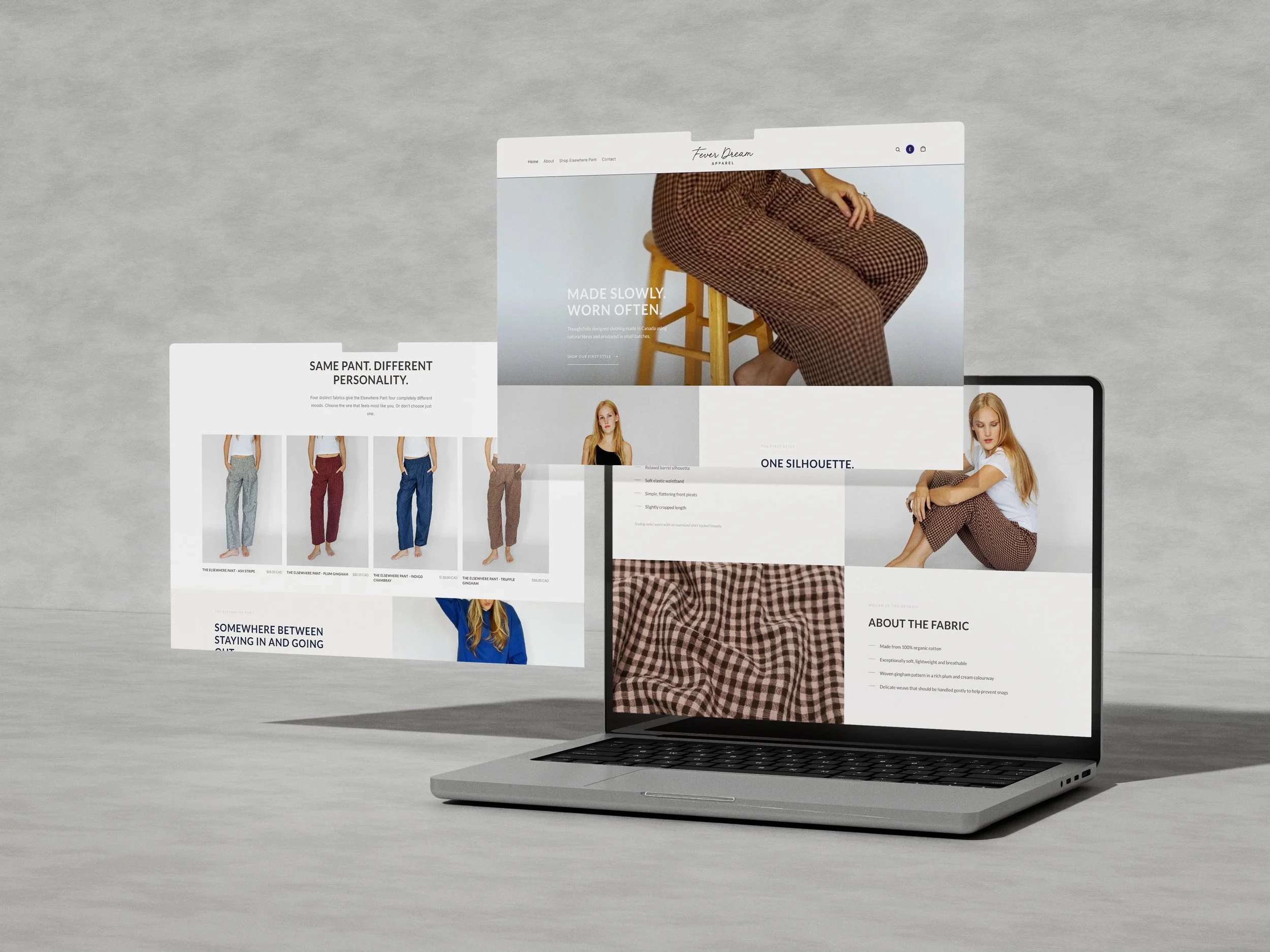
I designed and built the Shopify website in about a week, starting with a free theme and adding coding customizations to bring the brand into the experience.
The site needed to introduce Fever Dream, present the pants clearly and support the transition from discovering the brand to making a purchase.
Photography, product messaging and design worked together to give the website a consistent feel. I kept the initial build focused on what the launch required, rather than expanding the scope simply because I could.
Building the site myself allowed me to keep costs down while applying the same attention to design, content and usability that I bring to client projects.
Email Marketing
Email was one of the first pieces I put in place. Before the full website launched, I created a coming-soon page with an email signup offering 10% off. That capture brought in 244 subscribers, giving me an audience to communicate with before the pants were available.
Once the store opened, I continued collecting signups through the website and a popup. But building the list was only the beginning. I wanted people to get to know the brand after signing up, rather than simply receiving a discount code.
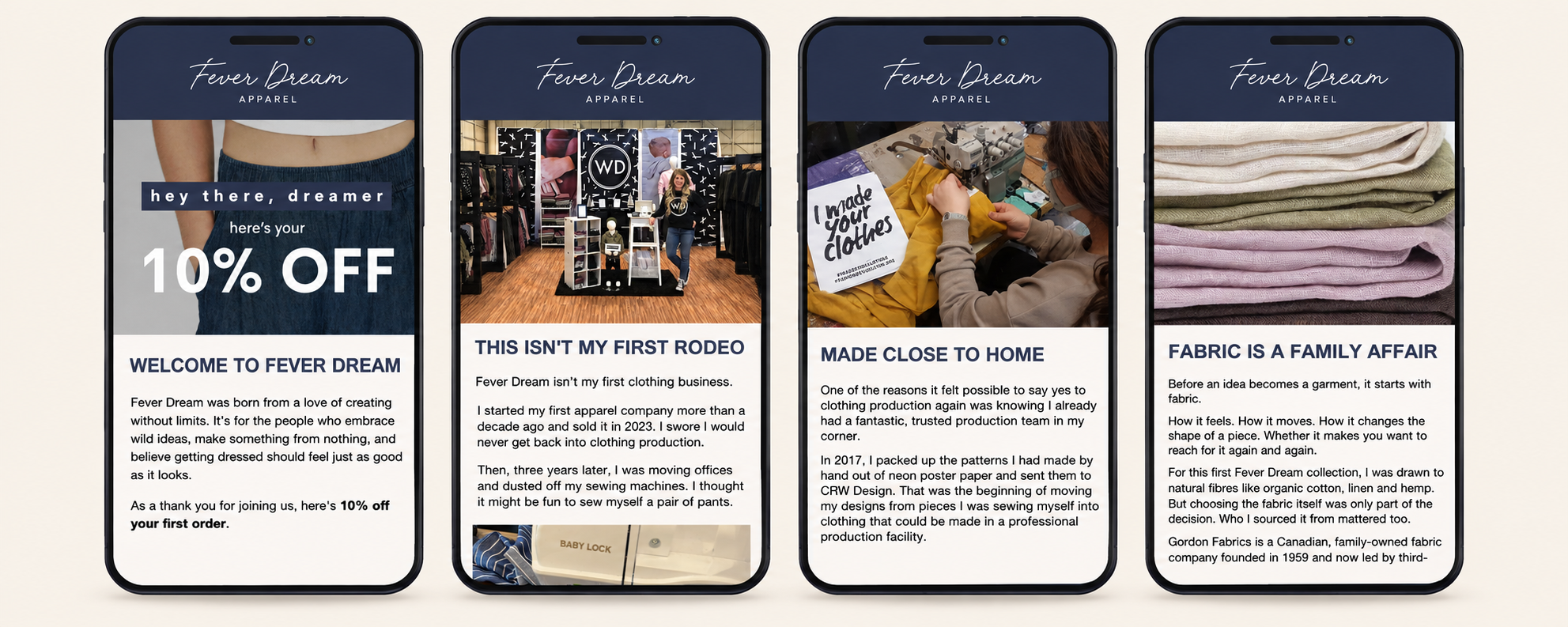
I created a four-part welcome journey in Klaviyo, beginning with the welcome offer and continuing with the story behind Fever Dream, the people making the clothing in Scarborough and the fabrics behind the collection. The emails were spaced over several days, giving new subscribers a more personal introduction to the business.
I also set up an abandoned cart email and a post-purchase review request, alongside individual campaigns for launches and sales.
Together, these created a way to introduce the brand, follow up with interested shoppers and continue the conversation after a purchase. The list has since grown to 460 members, giving Fever Dream an audience to build on beyond the initial launch.
The Launch Strategy
I set up Klaviyo early so I could start building an email list before the pants were available. A basic signup gave interested people a way to stay connected, supported by welcome emails and launch communications.
For social media, I spent time looking at how other apparel founders were connecting with customers on Instagram and TikTok. Conversational founder content on TikTok stood out as an approach I could realistically create.
I started filming myself sitting on a stool, talking about what I was building. When my samples arrived, I added a quick try-on video showing the different colours.
After noticing TikTok's “Promote for $9” option, I also began testing paid promotion on content I had already created.
I posted my first TikTok on September 2 and opened the store on September 12. Before the store opened, the website recorded 2,387 sessions.
Some of that traffic arrived before I had added a website link to my TikTok profile. Seeing people find the brand and sign up for emails was an encouraging signal, but the real test would come when the product became available.
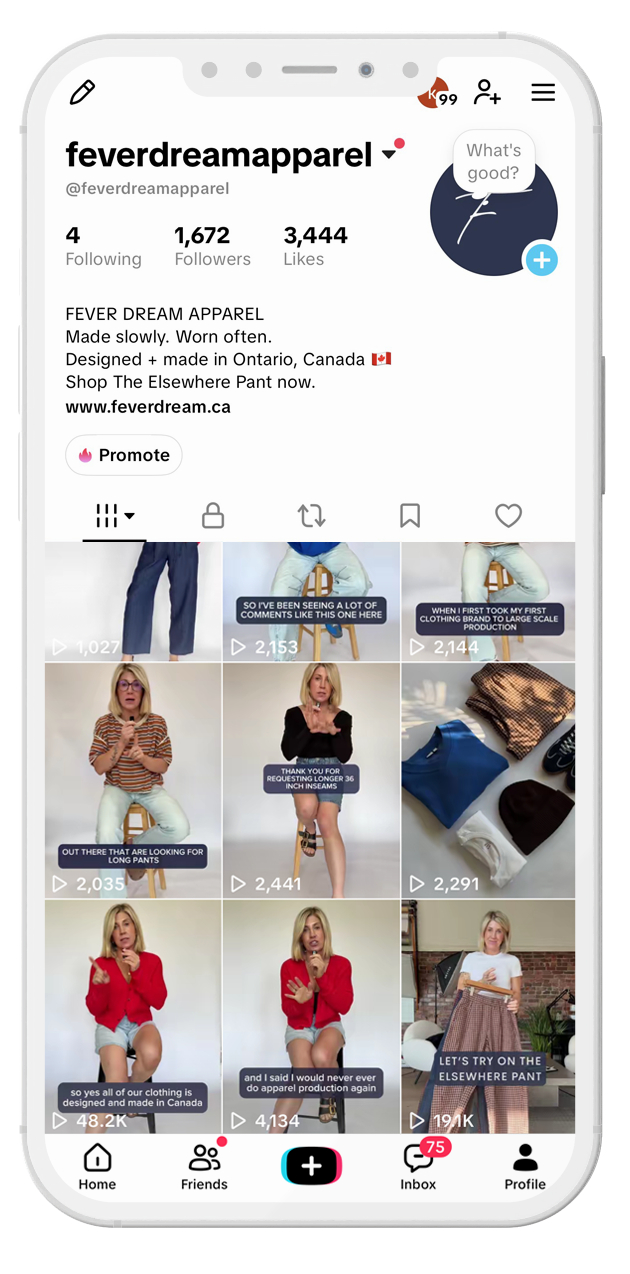
Social Media Content
With limited time, I wanted to find a content approach I could realistically maintain. I spent time looking at how other apparel founders were connecting with customers on Instagram and TikTok, paying attention to the conversations happening around their products.
Founder-led videos stood out. So I started filming myself sitting on a stool, talking about what I was making, why I was making it and what was happening behind the scenes.
When the samples arrived, I added simple try-on videos showing the different fabrics and ways to wear the pants. This gave people a closer look at the product alongside the story behind it.
I also tested paid promotion on existing TikTok content, starting with the platform’s “Promote for $9” option. It gave me a manageable way to experiment with reaching more people.
The production stayed simple, but I still had to show up consistently enough to build interest. Filming, editing, posting and replying to comments all became part of introducing the brand and helping potential customers get to know the person behind it.
The Results
A look at how a focused launch built an audience, generated interest and turned that interest into sales.
70
Pairs sold in week one
56% of the initial production run
77%
Of the first run sold
95 of 124 pairs by about six weeks
130.1K
TikTok post views
September 2 to November 1, 2026
The most encouraging part was seeing the interest turn into actual purchases. I had expected a lot of the pants to go to people I knew locally, so reaching customers beyond that circle was exciting.
Each part of the launch had a role. The content introduced people to the brand, the website helped them explore the product, and email gave me a way to stay connected and follow up. Keeping the launch focused meant I could give those pieces the attention they needed.
01 Before opening
68.1K
TikTok post views
Building interest in the 10 days before the store opened.
- Profile views 4.1K
- Likes 2.2K
- Comments 195
- Shares 78
September 2–11, 2026
TikTok Analytics, overall results
02 Website traffic
5,318
Website sessions
Visitors arrived through search, social media, email and direct traffic.
- Organic search 40.6%
- Direct 32.0%
- Organic social 20.3%
- Email 4.7%
September 2–November 2, 2026
Google Analytics. Top four channels shown.
03 Email audience
460
Email list members
An audience to stay connected with beyond the initial launch.
- Net list growth +460
- Email website sessions 250
- Average engagement per session 52 sec
List growth: July 1–November 2, 2026, Klaviyo.
Email traffic: September 2–November 2, 2026, Google Analytics.
Sales figures include online and in-person purchases. TikTok figures include paid and organic activity. Reporting periods are noted with each result.
Final Thoughts
Fever Dream gave me an opportunity to bring the different parts of my work together within a business of my own.
The early results were exciting, but keeping the launch simple still took effort. I was drawing on years of experience, established connections and skills that allowed me to handle much of the work myself.
I still had to build the website, write the emails, coordinate the photography and show up on camera. I had to film, edit, post, reply to comments and follow through.
For me, the value of this project is in how those pieces supported one another. The branding and photography introduced the product. The website gave people somewhere to explore it. Content created conversations, and email gave me a way to follow up.
Fever Dream is still an experiment. It has also become a practical example of how I approach a launch: make thoughtful choices, focus the effort and build a foundation that can grow with the business.

Have questions?
If you have questions or you’re interested in learning more about how we can work together, feel free to contact me.
ready to connect?
I’d live to get to know you and learn more about your business and your goals. Book a complimentary discovery call and let’s connect.